Feb 14, 2026 • 6 min readLinkedInFacebookTwitter
Why Airlines Should Rethink Passenger Technology
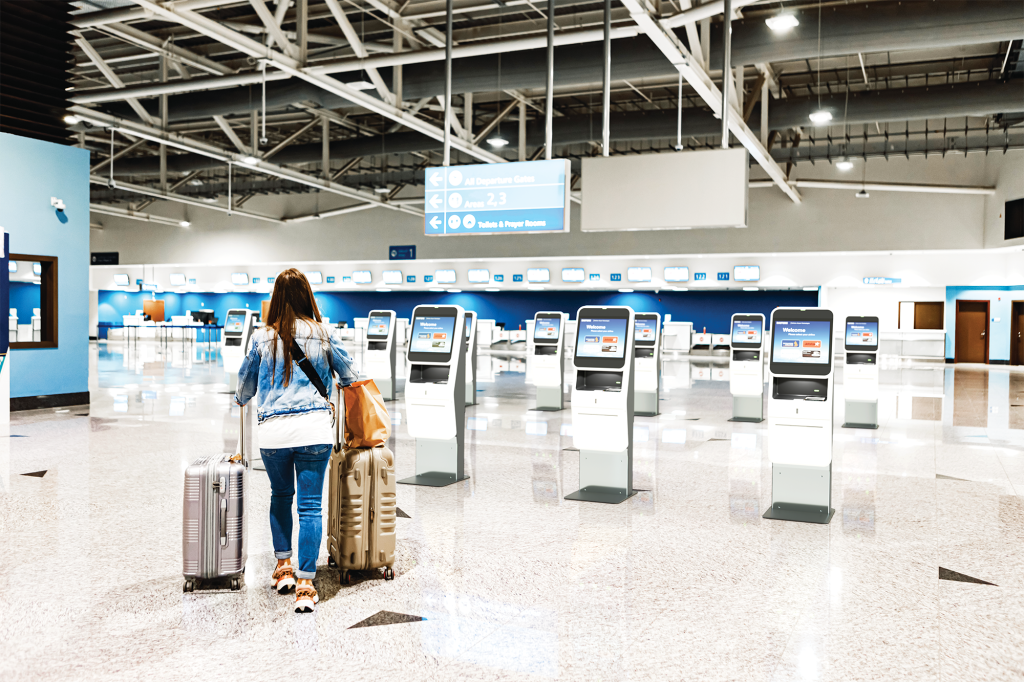
Across aviation, digital transformation has accelerated, yet many airlines still face long queues, inconsistent passenger experiences, and operational inefficiencies because the passenger journey is ultimately shaped at check-in and bag drop—not the boarding gate. While the technology to improve these moments already exists, success depends on applying the right self-service solutions with clear intent. When effectively integrated, capabilities such as CUSS, self check-in, and self bag drop reduce queues, minimise errors, and generate real-time insight for better operational decisions, creating not just more technology, but a connected, data-driven foundation for a more efficient, resilient passenger journey.
By David Jenkins: Business Solutions Manager, Daifuku
Across borders, the aviation industry has made huge strides in digital transformation in recent years, yet many airlines still struggle with the same bottlenecks: long queues, inconsistent passenger experience and operational inefficiencies.
But why?
At the centre of these challenges is something simple but powerful: the way passengers check in, drop their bags, and move through the airport.
Technology exists to make these moments seamless driving a shift in mindset for airports to no longer consider “can we?” – but “are we using the right solutions in the right way?”
For airlines, a change in perception, understanding that passenger experience and satisfaction does not occur when they board the plane, it’s the moment they enter the terminal.
Below we explore what these systems should be delivering for your airport and passenger experience. To close the gap, ensuring decision makers are armed with the information to make critical decisions when it comes to infrastructure and technology – and the intrinsic link between both.
CUSS, Self Check-In & Self Bag Drop
The market is saturated with options: Common Use Self Service (CUSS) kiosks, self check-in platforms, self bag drop units. Screens are plentiful. Hardware is polished. But value does not come from technology for technology’s sake. It comes from what these systems unlock operationally and experientially.
1. Faster Processing and Shorter Queues
Passengers want autonomy. Airlines want throughput. Airports want flow.
A well-designed self-service environment reduces queue times meaningfully and reallocates staff to where they add the most value – exception handling, customer care, and recovery.
The right self-service setup should shorten queues dramatically and shift staff to higher-value tasks, not create new friction points.
2. Consistency Across Airports
Airlines operate across dozens, sometimes hundreds, of airports—each with its own systems, layouts, and constraints. Without commonality, inconsistency becomes the norm.
CUSS environments remove that fragmentation, offering passengers a predictable experience wherever they check-in, while simplifying airline operations and reducing dependency on bespoke local integrations.
3. Fewer Errors, Lower Cost
Good UX is not a “nice to have” – it is a cost-reduction strategy. Strong self-service design reduces mis-tagged bags, check-in errors, and manual interventions. The result: improved on-time performance, reduced rework, and a measurable reduction in operational expenditure.
4. Real-Time Data for Better Decisions
Modern passenger systems do more than process passengers. They generate data—rich, real-time insight into passenger behaviour, peak demand, system performance, and exception trends.
This intelligence enables airlines to plan resources more effectively, respond faster to disruption, and move from reactive operations to informed, predictive decision-making.
5. Passenger Adoption Made Simple
Adoption is the ultimate litmus test. If self-service is intuitive and fast, passengers embrace it. If it is confusing or unreliable, they abandon it, and the queue reappears. Technology that passengers avoid delivers zero return on investment. Making the design collaboration process between all stakeholders critical.
The Opportunity Ahead
Airlines possess the opportunity to reshape the passenger journey, working in closer alignment with their airport partners, to deploy solutions that are:
- more flexible
- more integrated
- more secure
- more cost-efficient
Airlines seek reliability. Airports demand efficiency. Passengers expect frictionless travel. The intersection of these priorities sits squarely at check-in and bag drop— and where the next wave of industry improvement will be won.
From Technology Investment to Tangible Outcomes
Rethinking passenger technology is not about installing more screens or ticking a digital transformation box. It is about making deliberate choices that align passenger experience, operational efficiency, and long-term resilience.
What this looks like is moving beyond fragmented deployments and pilot projects; instead taking a holistic view of the check-in and bag drop ecosystem – how systems connect, how data flows, how staff and passengers interact, and how performance is measured over time.
The most successful implementations are those designed collaboratively with airport partners, built for scale, and supported by platforms that can evolve as demand, regulation, and passenger expectations change.
The action is clear: assess what is working, identify where friction still exists, and invest in integrated, common-use solutions that deliver consistency, intelligence, and measurable return. Airlines that take this step will not only reduce cost and complexity, they will future-proof the passenger journey at a time when resilience and reliability matter more than ever.
To speak with a Business Solutions Manager in assessing your current operational flow, contact the team here.

About David Jenkins
David Jenkins is a strategic commercial leader with over two decades of experience driving digital transformation and scalable growth across multiple sectors. He has delivered significant success in aviation technology, including leading SaaS-based solutions for airport operations and passenger experience optimisation. David’s career spans high-impact roles in EMEA, where he has defined and executed strategies for global expansion, revenue optimization, and digital innovation. His expertise includes building partnerships, unlocking new revenue streams through data-driven platforms, and shaping future-ready solutions for complex operational environments. Passionate about leveraging technology to solve real-world challenges, David continues to influence the evolution of smart, connected ecosystems in aviation and beyond.
Email david.jenkins@daifukuoc.com or connect with David here.
About Daifuku
Daifuku is a global leader in end-to-end airport operations, working closely with airports and airlines to deliver seamless, data-driven passenger and baggage experiences. With decades of expertise in baggage handling systems, digital airport solutions, and passenger self-service technologies, Daifuku helps partners optimise performance, strengthen operational resilience, and elevate the passenger journey.
From CUSS kiosks to self check-in, self bag drop, and advanced visualisation systems like Sym3 and Airport Operations Systems, Daifuku delivers trusted, future-ready solutions that enable airports and airlines to operate smarter, faster, and more efficiently.
Related articles
Nov 10, 2024 • 5 min read
State of Aviation in Australia and New Zealand: 2024 Overview

Aug 07, 2024 • 3 min read
Efficiency Takes Flight: Optimising Baggage Handling Costs with Self Bag Drop Systems
Newsletter
Never miss an article
Subscribe to our newsletter and be the first in the know.
Join the conversation
For the latest industry articles and networking